
 Aourir, Banana Village, Morocco


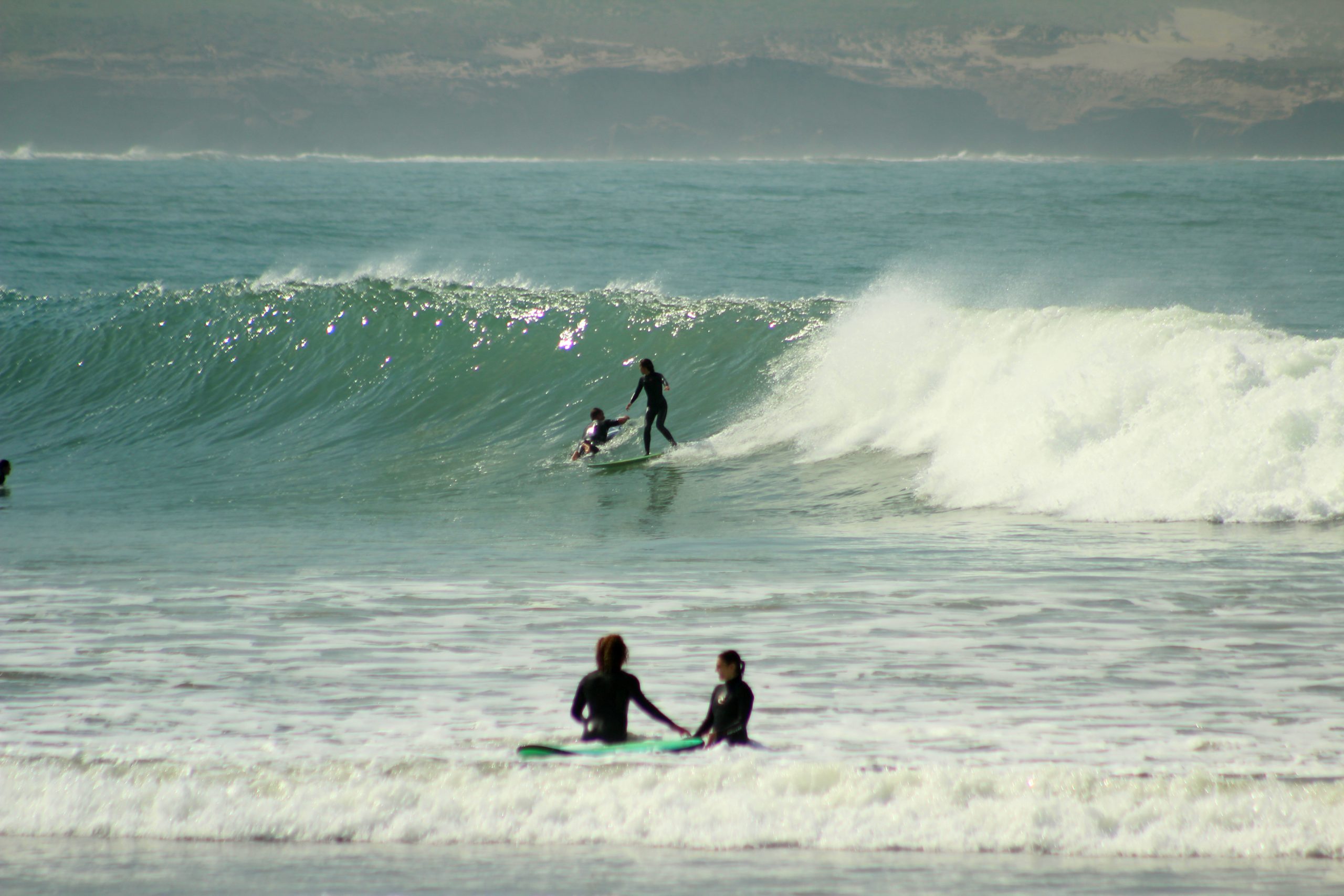
The Complete Beginner’s Guide to Surfing in Taghazout Bay
Learn to surf Taghazout
Secondary Keywords: Beginner surf camp Morocco, surf lessons Aourir, Devil’s Rock surf lessons, Taghazout Bay surf guide, beginner surf spots Morocco
Meta Title: The Complete Beginner’s Guide to Surfing in Taghazout Bay | Kayn Surf
Meta Description: Planning your first surf trip? Learn to surf in Taghazout Bay and Aourir. From top beginner breaks to gear and safety tips, here is your complete roadmap.
Morocco’s southwest coast has an international reputation for freight-train right-handers and heavy point breaks, but Taghazout Bay is equally one of the safest, most forgiving classrooms on the planet for beginner surfers.
With its long, sandy crescent beaches, gentle whitewash rollers, and year-round Atlantic swell, the stretch of coastline between Aourir (Banana Village) and Taghazout offers ideal conditions to stand up on your very first wave. Here is everything you need to know before paddling out.
1. Top Beginner-Friendly Spots Near Aourir
As a learner, avoiding shallow jagged rocks, intense currents, and heavy crowds is essential. These sandy-bottom spots provide forgiving peelers and ample space to master your stance:
- Devil’s Rock (Tamraght): Just 3 minutes north of Aourir, this wide, sandy beach break produces consistent waist-to-chest-high whitewash rollers. The sandy bottom ensures zero stress on wipeouts, making it the primary training ground for local surf academies.
- Crocro Beach (Imourane): Situated right next to Devil’s Rock, Crocro offers a vast stretch of sand with multiple mellow peaks breaking along the beach. It gives learners room to spread out without feeling rushed by other surfers.
- Panoramas Beach (Taghazout): While the outer point requires intermediate skill, the sheltered sandy beach inside the bay creates gentle, rolling reforms. It is one of the best locations to practice turning the board toward the open face.
- Banana Beach (Aourir): On smaller summer and autumn swells, the inside sandbanks near Banana Point deliver clean, gentle slopes ideal for learning how to angle your takeoff.
2. What Equipment You Need
Morocco’s Atlantic waters stay comfortable year-round, but having the proper gear makes all the difference for balance and endurance:
- The Foamie (Soft-Top Surfboard): Beginners should start on an 8’0″ to 9’0″ foam board. Soft-tops pack immense buoyancy (volume), making paddling effortless, board control stable, and accidental bumps pain-free.
- Wetsuit Thickness:
- Autumn to Spring (October–April): Water temperatures sit around 16°C to 19°C (60°F–66°F). A 3/2mm or flexible 4/3mm full suit keeps you warm through 2-hour coaching sessions.
- Summer (May–September): Water warms up to 20°C–22°C (68°F–72°F). A standard 3/2mm or shorty wetsuit works comfortably.
- Sun Protection: Zinc sunblock is non-negotiable. The Moroccan sun reflects intensely off the water, especially during mid-day sessions.
3. Essential Phases of Your First Surf Lesson
A structured coaching session builds your muscle memory on dry land before you ever hit the salt water:
- Beach Safety & Ocean Awareness: Understanding rip currents, shoreline breaks, and how to hold your board sideways to incoming whitewash so it never hits you.
- The Pop-Up Breakdown: Practicing the three-step stance transition on the sand—chest lift, back foot plant, front foot drive—ensuring your feet land centered over the stringer.
- Whitewash Catching: Heading waist-deep into the water, timing incoming rollers, and learning how many paddle strokes you need before popping up.
- Trimming & Gliding: Shifting weight through your heels and toes to steer the board straight to the sand.
4. Key Surf Etiquette for Beginners
Understanding lineup basics keeps everyone safe and smiling in the water:
- Never Let Go of Your Board: If a wave approaches, paddle over it or hold onto your board firmly. Never ditch your board behind you where other learners might be paddling.
- Keep Your Distance: Maintain at least two board-lengths of space between you and other surfers in the whitewash.
- Look Before You Pop Up: If someone is already riding the wave from deeper inside, wait for the next roller. Priority belongs to the surfer closest to the breaking curl.
Beginner Progression Roadmap
| Stage | Focus Skill | Ideal Wave Type | Recommended Board |
| Day 1–2 | Belly-riding, paddle power, pop-up mechanics | Waist-high straight whitewash | 8’6″ – 9’0″ Soft-top |
| Day 3–4 | Balanced standing, trimming left and right | Chest-high rolling reform waves | 8’0″ Soft-top |
| Day 5–7 | Angled takeoffs, paddling into unbroken green waves | Soft unbroken point/sand peaks (e.g., Panoramas) | 7’6″ – 8’0″ Funboard |
Fast-Track Your Progress with Kayn Surf
Learning to surf on your own can be frustrating; learning with experienced local instructors transforms it into a life-changing week. At Kayn Surf in Aourir, our certified coaches guide you every step of the way:
- Small group ratios for personalized ocean feedback.
- Daily beach transfers to the safest, calmest sandbanks based on daily tides.
- Rooftop surf theory and video analysis to correct your stance before your next session.
